KNOWLEDGE / THE CELESTIAL ATLAS

Understand the sky.
Keep your own perspective.

Learn what astrology traditionally says, what astronomy actually calculates and why interpretations remain open to question.

Begin exploring →
Illustrated observatory and golden lunar astrolabe
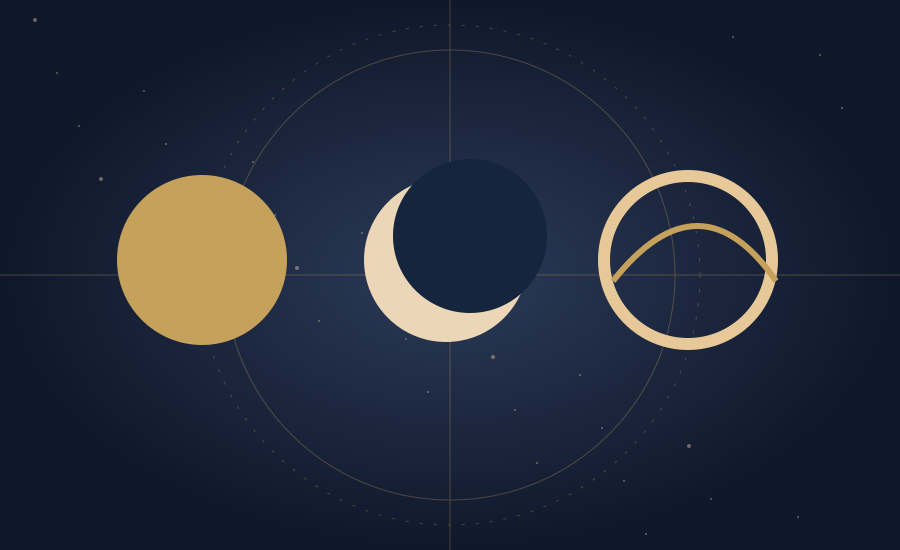
Original editorial illustration: Sun, Moon & Rising
01 / FOUNDATIONS

Sun, Moon & Rising

Three familiar terms, three different roles within a birth chart.

The Sun sign refers to the zodiac section containing the Sun as seen from Earth for a particular moment. In the tropical system it is usually the first part of a chart people learn. Astrologers symbolically associate it with identity or direction, but there is no demonstrated scientific basis for using a Sun sign to predict personality.

The Moon sign is calculated from the Moon's celestial position at the same moment. It changes signs more often than the Sun. Traditional interpretations use it to discuss feelings, habits and the rhythms of everyday life, yet those meanings are cultural and interpretive rather than established measurements.

The rising sign, or ascendant, is the zodiac point where the ecliptic meets the eastern horizon. It depends strongly on location and precise time, because Earth rotates. A guessed or missing birth time can therefore make a rising sign unreliable. The geometry can be calculated; its alleged psychological significance is a separate matter.
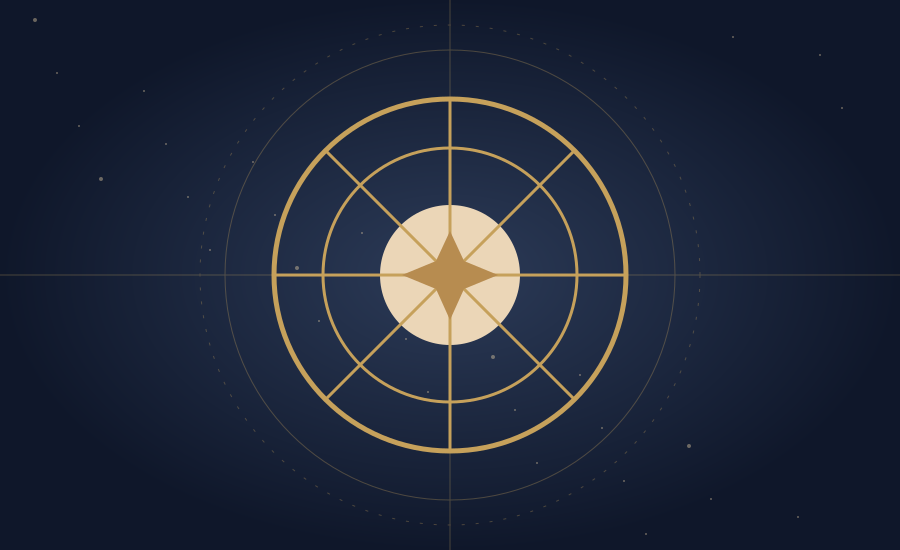
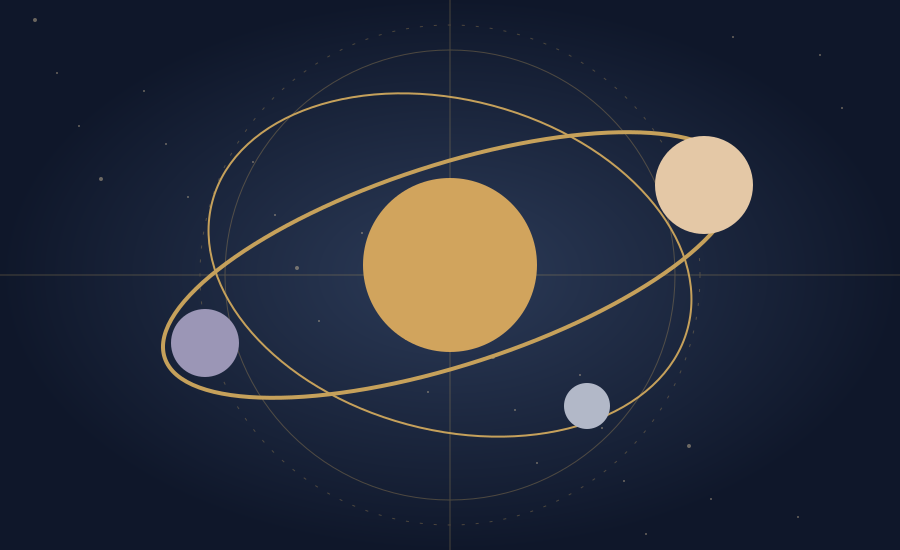
Original editorial illustration: What is a birth chart?
02 / THE MAP

What is a birth chart?

A diagram of positions at a time and place, interpreted through astrological tradition.

A natal or birth chart starts with a date, time and location. Astronomical models can calculate positions of the Sun, Moon and planets relative to Earth. These positions are projected onto a reference system, often the ecliptic, and organized by zodiac signs.

Astrologers may then divide the chart into houses. House systems use the local horizon and meridian in different ways, so two charts from different house systems can show different house placements without changing the underlying planetary coordinates. A birth time is vital for this part of the geometry.

The diagram's numerical positions are different from the meanings assigned to them. Claims that a chart determines relationships, personality or future events lack scientific support. Elyunora presents interpretations as reflective material, while keeping astronomical calculations transparent and auditable.

Explore the fictional chart studio →
Original editorial illustration: Planets and houses
03 / THE LANGUAGE

Planets and houses

How symbols of the sky become categories in astrological storytelling.

Traditional astrologers assign themes to celestial bodies: Mercury is often linked to messages and learning, Venus to aesthetics and harmony, Mars to drive and conflict, Jupiter to growth and belief, and Saturn to structure and time. The Sun and Moon are commonly grouped with the planets in astrological language even though astronomy classifies them differently.

Houses are chart sectors whose numbering runs from one to twelve. In symbolic readings, they refer to topics such as self-presentation, resources, relationships or public life. This classification varies across schools and should never be confused with an independently measurable cause of human decisions.

A useful way to read a chart is to ask three separate questions: what is the calculated position, what does this school of astrology traditionally associate with it, and what personal question—if any—does that metaphor help you consider?

Original editorial illustration: What is zodiac compatibility?
04 / RELATIONSHIPS

What is zodiac compatibility?

A tradition of comparing symbols, not a test of whether two people belong together.

Compatibility content typically compares the elements, modes or placements assigned to two charts. Popular Sun-sign pairings are especially simple because each ignores almost everything else that a more detailed traditional reading would consider.

Astrologers may talk about affinities between fire and air, or between earth and water, and about differences between cardinal, fixed and mutable approaches. These categories can make for interesting conversations, but they do not prove that a relationship will succeed or fail.

Trustworthiness, communication, respect and shared decisions are better understood through people's behavior than through zodiac combinations. Treat compatibility writing as an invitation to discuss preferences and expectations, not a recommendation to pursue or end a relationship.

Curiosity is a good beginning.

You can explore your own sign without treating astrology as a fact about your future. The free weekly experience offers a moment of reflection, not advice you must follow.

Explore my weekly reflection ↗